


Learn about 10 common Florida house spiders and how to identify them. Learning details can help you recognize potentially dangerous spiders and support beneficial ones. Most Floridians know how dangerous gators are, but spiders can also cause concern. Florida's warm climate creates the perfect environment for insects and bugs, so it’s not uncommon to see spiders in the home. Spiders are easier to manage if you can identify them. Below are the most common Florida house spiders and what you should know about them.
Jumping Spiders
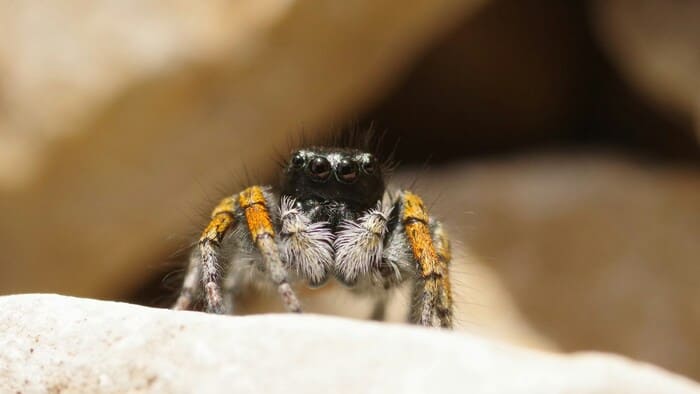
Jumping spiders are easily identified by their eyes. They have eyes that are arranged in three rows. They are relatively small and come in a variety of colors. A jumping spider won’t make a web in your home because they actively hunt for prey during the day. Instead of a web, they pounce on their victims.
These are one of the most common house spiders in Florida, often mistaken for bugs due to their erratic movement and bold personalities
Jumping spiders are attracted to light, so seeing them near windows is common. However, jumping spiders like to hang out everywhere. You can find them under furniture, on bookshelves, near windows, and on the underside of doors. They are adventurous spiders and love exploring the entire house. A jumping spider’s bite might sting but won't harm you.
Daddy Long Legs
Daddy Long Leg Spiders Florida House

Daddy long legs are famous for their legs. They have a tiny, petite body and extremely long legs. Daddy long legs are related to scorpions, but because of their appearance, they are usually placed in the same category as spiders. A daddy long legs’ body has no distinct head or abdomen and looks like one tiny circle.
If a daddy long legs is in your home, it’s probably hiding in a dark area away from human activity. The spider likes attics, dark furniture, and other hiding spaces where it can get some peace and quiet. They also enjoy hiding under bathroom sink cabinets.
This species falls under the “Florida household spiders” category and is harmless to people.
American or Domestic House Spider
No home can escape the American house spider, which is willing to build a nest anywhere. American domestic house spiders like to hide in the nooks and crannies of your home. They can be found almost anywhere in the house. They enjoy spending time in peaceful places, like attics, basements, closets, and cupboards. They are very common Florida house spiders.
The American house spider is usually not very large; most are smaller than the size of a nickel. They can range in color from brown to gray to tan. The spider is usually dark, with a pale mark on its abdomen and dark bands on its legs. American house spiders in Florida make messy webs and are a prevalent Florida house spider.
If you see webs in corners or near ceilings, it’s likely this common house spider in Florida.
Brown Recluse Spider

Brown recluse spiders have a violin-shaped marking on their back immediately behind their eyes. That mark will help you identify if it’s a brown recluse. Sometimes, the violin mark isn’t present on a brown recluse. In this case, the best way to identify it is through its eyes. Recluses have six eyes arranged in pairs, while other spiders have eight. Although they’re called brown recluses, they can also come in gray.
Thankfully, the brown recluse is an antisocial spider. It tries to stay away from humans and avoid interactions. It's usually found where there is a lack of activity, such as an attic, a basement, or a closet. In some cases, it can be found inside the walls.
This is one of the most dangerous spiders in Florida homes and should be taken seriously.
Sac Spiders
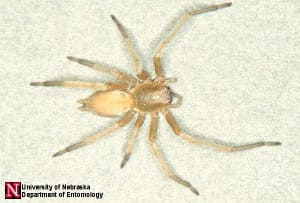
Sac spiders are common Florida house spiders. They look like the albino version of other spiders with an incredibly light tan, beige, or ashen body. Sometimes, their bodies can contain a hint of green coloring. The ends of their legs have dark tips.
Sac Spiders are generally active at night. During the day, they hide along walls, ceilings, or baseboards. Sometimes, they can be found lurking behind picture frames.
If you’re noticing a small brown spider in your Florida house, this could be a sac spider.
Black Widow

Black widow spiders are venomous spiders found in Florida. They are easily identifiable by their shiny black bodies and red hourglass markings. The spider is threatening, and its venom is more potent than a rattlesnake's. The female black widow is the most venomous spider in the nation; ironically, only the females bite. A black widow found in the house may require an immediate call to pest control.
Among the large black spider Florida species, the black widow is the most dangerous.
Brown Widow
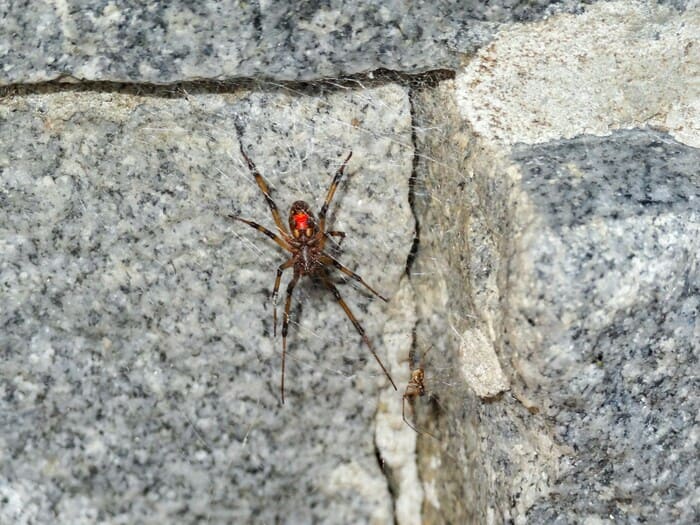
The brown widow spider is another cause for concern. Although they’re mainly found outside, sometimes they can enter the home. The spider has a distinctly characteristic look of an orange or yellow hourglass marking on the underside of its abdomen. A brown widow also has black and yellow banded legs. Its overall color is black or dark brown. The spider is common in Florida and initially entered the US by way of Florida in the 1990s. Thankfully, the brown widow is not as venomous as the black widow.
This is one of the few Florida spiders orange in appearance with noticeable leg patterns.
Cellar Spiders

It’s common for Florida residents to have cellar spiders in their homes. Cellar spiders are identifiable by their long, skinny legs. They are similar in appearance to a daddy long-leg spider but have oval-shaped bodies ranging from pale yellow to light brown or gray. They like to hang out in garages, sheds, and crawl spaces but also love cool, dark rooms. Cellar spiders aren’t harmful to humans or pets.
Also known as household spiders in Florida, these are gentle and helpful pest controllers.
Southern House Spider in Florida
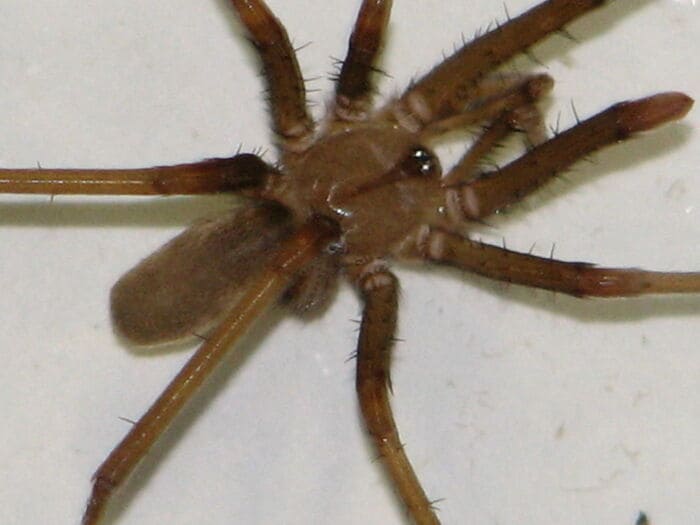
People often confuse Southern house spiders for American house spiders, but the two spiders are a bit different. Southern house spiders in Florida are usually brown or amber in color. Female southern house spiders are black or charcoal.
Southern house spiders may sometimes be mistaken for brown recluses because some have a violin-like marking. Unlike the brown recluse, a southern house spider is covered in hair and looks like a tiny tarantula. They like to hang out in dark areas and love windowsills, shutters, and overhangs. If they build a web in the home, the female usually stays near her web, but the males wander.
They’re one of the larger common house spiders in Florida but are not venomous.
Wolf Spiders in Florida

Wolf spiders are a common species in Florida. They are usually found running across the ground, where they can easily camouflage. Wolf spiders are easily identifiable by their large, hairy bodies resembling tarantulas.
Wolf spiders occasionally enter homes by accident or to seek shelter in cold weather. They are more likely to enter during the winter months and can be found near windows or doors. Instead of building a web, the spider likes to burrow or find a home under debris. Wolf spiders have excellent eyesight and can see you coming.
Among large Florida spiders, this one causes frequent confusion due to its intimidating look.
Benefits of Common House Spiders in Florida
Spiders aren’t all bad. They have a few benefits. Their most significant advantage is that they are a form of pest control. They eat other insects and reduce the population of many pests, such as flies, roaches, fleas, moths, and earwigs. The average Florida house spider eats around 2000 insects yearly, making it an incredible form of natural pest control.
Spiders also love to eat mosquitos, which are a nuisance in Florida. They can be vectors for diseases and viruses. Some health experts are concerned about the rise of mosquito-borne illnesses threatening Florida residents. For example, the Zika virus has caused concern over the years. Florida has one of the nation's best mosquito control teams, but spiders are also efficient at mosquito control.
Additionally, spiders eat other spiders. Just like Florida house lizards, spiders love eating insects, but they also eat their own. Non-poisonous spiders can keep your home safer by eating dangerous spiders. Spiders can benefit a house, but it’s still better to try and keep your home free of spiders.
Even common spiders found in Florida play a role in maintaining ecological balance within the household.
 The Orbweaver spider is often mistaken as a Black Widow; they are very beneficial and common to see outside your house in Florida.
How to Get Rid of Spiders in the Home
Spiders are a prevalent household pest. Eliminating them completely can be very difficult, even with professional pest control. However, there are things that you can do to reduce the number of spiders in and around your home.
Remove Spider Webs
When you remove spiderwebs, you destroy their habitat. Destroying a spiderweb encourages a spider to leave the home and seek shelter elsewhere. Destroying spiderwebs when you see them will make your house inhospitable to spiders.
Clean the Outside Environment
The environment outside your house can dictate how many spiders you’ll have inside. Maintenance is essential to keeping spiders from entering the home. Spiders like debris and shady areas, so eliminating debris and clutter around the house is helpful. Also, taking care of dead leaves, weeds, and tall grass can prevent spiders from entering your home. Trim tree branches to ensure they don’t touch the exterior of your home.
Seal up Cracks
Spiders gain entry through small cracks. Examine the foundation of your home for cracks, especially decks and patios. If you have holes in the wood around your home, make sure that you seal them properly. It’s also important to check windows and door screens for gaps, holes, or cracks.
Call for Professional Help
Professional help is an excellent option when spiders are invading your space. There are many reliable pest control services in Florida. For a fee, professional services can help you eliminate spiders from your house. The average cost for pest control services typically ranges from $300 to $1,200 annually.
Many Florida household spiders are persistent, and professional exterminators may be necessary for long-term relief.
How to Treat Spider Bites
Most spiders are not out to get humans. Instead, they are hoping to trap insects and bugs. The exception is the sac spider, a "recreational biter" who likes to bite humans for fun. However, spider bites are common and are more likely if a spider is squeezed or pinched. When a spider bites you, it may leave two distinct marks on the skin. The difference between a spider bite and other bug bites is the two puncture marks. Common spider bite symptoms include swelling, welts, itching, and rash.
Most spiders are not dangerous enough to cause medical concern. However, the black widow spider and the brown recluse are both venomous spiders that can trigger physical problems if bitten. When a black widow bites, it releases neurotoxins that can be harmful and cause health complications. Venomous spiders can cause more intense symptoms, including sweating, headaches, muscle pains, fever, chills, and difficulty breathing. If your symptoms are severe, please seek medical help.
Most spider bites can be treated at home. First, clean the wound with soap and water. Applying ice can reduce swelling and inflammation. If swelling occurs, elevating the area can also reduce swelling. Keep the area clean to prevent infection. Some doctors recommend covering the area with a thin layer of Vaseline.
What Does a Poisonous Spider Bite Feel Like?
There are five species of venomous spiders in the Sunshine State. These include the Northern and Southern black widows, the red and brown Widows, and the brown recluse. If you’re bitten by a venomous spider like a brown widow, the initial bite might be completely painless, but several hours later, the area will begin to itch and turn red. A distinct marking of a brown recluse bite is a red or purple ring that looks like a bulls-eye.
The black widow spider bite feels like a tiny pin prick. However, you may experience muscle cramping, headaches, high blood pressure, sweating, and nausea within less than an hour. Getting prompt medical attention if bitten by a black widow is essential.
Jumping spiders aren’t venomous to humans but can also cause symptoms. The bite feels similar to a wasp sting. Jumping spider bites may cause pain, itching, swelling, and redness in the area where you were bitten. You may also experience a headache. Never squeeze a spider bite. It can cause the venom to spread further into the body. Instead, keep the wound clean and seek medical attention if needed.
What are the most common house spiders in Florida?
How do I identify a dangerous spider in Florida?
Are orange-colored spiders in Florida dangerous?
What is the small brown spider I keep seeing in Florida?